Fire, flood and drought
Farmers constantly fight for a financial fair go. Fire flood and drought can’t keep them down, but politicians and bankers can grind them into the ground. Finance in the form of mortgage loans is the Achilles heel of many farms. Before bank de-regulation a bank manager would never lend a farmer a loan he could not service and repay. Today there is no skilled bank manager. Most loans are done by brokers paid commission on the amount of the loan. What is a risk for the customer is not necessarily a risk for the bank. Some mortgage brokers falsify their clients figures in order to get a loan approved. That sounds like it is helping the farm borrower. In reality it is walking the farmer right into what is effectively a Pig-trap for People, an unaffordable loan Debt Trap!!
Avoiding Unaffordable loans
The oldest trick in the moneylenders’ book is to lend farmers money they can’t afford to repay. It is easy because when farmers have been affected by bad government policy, bad seasons and bad prices they lose money and are frequently desperate for funds. Even if the block next door that they need, is suddenly on the market, they just want a loan to do it. The last thing they think of is how they can service and repay the loan. “That’s the bank’s job”, they say. “They are the finance experts. The bank will tell us if we can’t afford it. A banker would not be silly enough to lend us the money if it wasn’t okay.”
Farm Debt Consultants developed a very special and effective “win-win” way of farmers buying extra blocks.
Lending with one hand and taking it back with the other
But trusting the bank is where the farmers go wrong. The bank will make more money if the farmer cannot afford the interest or regular repayments! Why? Because then the bank will increase the interest rate by 3% or more. Then the interest will be less affordable so the unpaid portion gets bigger and added to the loan. So interest is now charged on it, as well as the original loan. From then on the farmer usually believes that they are paying the interest.
That is because the bank has loaned them a long-term loan on one account plus an overdraft account to pay regular bills. The interest is paid out of the overdraft. Eventually the overdraft limit has to be increased and the farmer thinks that is due to farm expenses. In reality it is due to the interest being paid to the bank. Sooner or later the O/D will be getting a bit high, so the bank will offer to increase the long-term loan. Again the farmer will be delighted to have the bank’s support. Interest being paid will now be paid out of the increase in the term loan as well as the overdraft. The bank lends the farmer the extra money to make payment to itself.
Creeping foreclosure
This borrowing from the bank to pay it‘s interest will continue until the debt reaches about 80% of the farm value. Then the bank will gently ask for the loans to be reduced. All the contracts that the farmers have not read will have clauses allowing the bank to impose obligations on the borrowers. So the farmers will probably have “defaulted” by not doing all of those things. Predictably the farmer will explain that repaying part of the loan “now” is just not possible. The bank will act surprised and explain that the loan is not performing and that it must protect its shareholders money.
This is where the bank moves gently towards putting the farm up for sale or appointing receivers. Receivers would manage the farm and sell assets to repay part of or all of the loan. Receivers charge like a wounded bull. That increases the amount taken to repay the debt.
A glimpse of Daylight
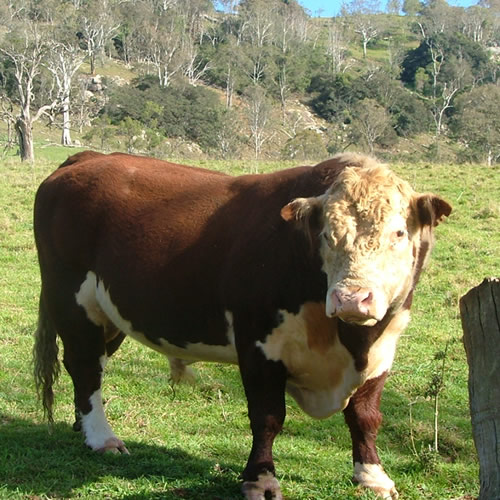
There is, at this time, a fleeting glimpse of daylight at the end of the loan repayment tunnel. While the bank is gently moving towards a forced sale, most farmers think they have a reprieve. It is like when the aggressive bull turns and walks away. That’s the time to head for the vehicle or the yards, before he comes storming back head held low in attack mode! The time for the farmer to move to defensive mode is while the bank is scheming and planning the detail of how to foreclose.
This is a brief period of grace to build solid defence and seek out the best escape route. We have, over almost 40 years of dealing with de-regulated banks, developed the framework of an action plan. Step one is to look very closely at whether the bank has breached any of the many regulations, laws and codes that are designed to protect borrowers. Just like drivers often breach speed limits, banks often breach these mortgage loan rules. That provides very good defence material when attending the inevitable Farm Debt Mediation. The bank cannot sell a farmer up without Farm Debt Mediation. Properly managed, that is a real opportunity to cut a very good deal with the bank.
The second step is to use one of the cheap and easy Loanagrams to check out all the other banks who lend to farming, to see how good a loan they would offer. Farmers sometimes think that if their own bank does not want to deal with them because they defaulted on the loan, then nobody else will. That is not the case. If they can convince a new bank of their ability to handle that loan well, most banks will welcome them with open arms. That is a case of preparing a really appealing loan application instead of the deadly boring one. Bank Debt Consultants know how to show the farm and enterprise in its best light to please a bankers heart.
Farm Debt Consultants
Sick of seeing hard-working fellow primary producers robbed in this way we developed our
Farm Debt Consultancy. We designed that Loanagram service to help farmers get the best possible loans by making the banks compete for the business, just as buyers compete in the saleyards. A good loan in the first place is like good breeding stock to produce the right progeny. We also converted our Australia-wide Chartered Accountancy practice that concentrated on tax, succession planning and profitability, into a Farm Debt Consultancy. Profitability is a major part of the farm debt equation so we continued our focus on that. We learned a lot while running our own merino sheep and beef cattle properties. But now we have found out that bankers are using another way to relieve farmers of their hard earned savings.
Succession Planning
We learned that Succession Planning was a new route the banks had begun to use to trap farmers into unaffordable debt. It was so subtle! The worst sort of succession planning is one where the younger generation borrows on security of the farm to pay their parents for the farm. That’s handing on debt. Child abuse one farmer called it. There are much better ways to plan succession and hand on the farm than handing on a debt to the son or daughter. Getting the bank involved has the farm mortgaged for some amount. As prices rise so does the farm’s ability to cover debt.
Once it holds a mortgage over the farm, the bank can then persuade the younger generation to spend money like water. The parents and offspring barely even notice that the debt just increases and interest increases. It is like a free bucket of money. The farm just spends and the bank just covers the cost. That is until the debt becomes so high that the bank can only get its money back by selling the farm. Would the bank do that? Of course it would. The directors of our big banks do not care about the farmers. They just want to earn their multi-billion-dollar profits for the bank and their multi-million-dollar annual salaries.
Debt free farming is best
The best form of Succession Planning hands on the farm completely debt-free. Then the kids can really make money, support their parents and enjoy farming. They can do that without the bank constantly on their back and sucking more money out of it than they get themselves. A debt free farm can far better withstand bushfires, floods, drought, price collapses and negligent government policies. It will allow the farmers to stack money way in the bank if they can resist spending it on farm improvements. The prudent farmer has a supply of money in the bank and feed in the shed or silo. It is our experience that most decades deliver 3 good years, 3 bad years and 4 very ordinary ones. Best policy is to put the reserves away in the good years to cope with the bad ones. Resist the urge to expand and improve. Concentrate on making good profits from agriculture. Put a 5
th of that away in a different bank from the one with which you trade regularly.